Dying with AI (2025)

Artistic Fellowship at Chinese University of Hong Kong, Spring 2025
with thanks to the social workers, grief counsellors, and other death professionals who have kindly participated in my interviews

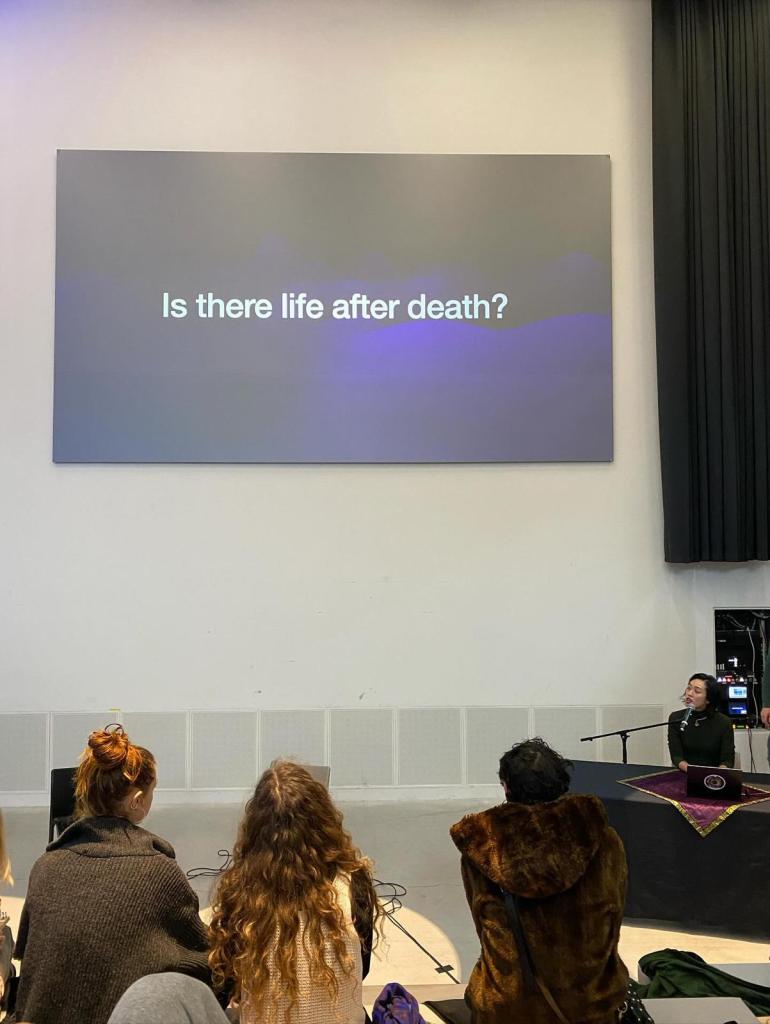
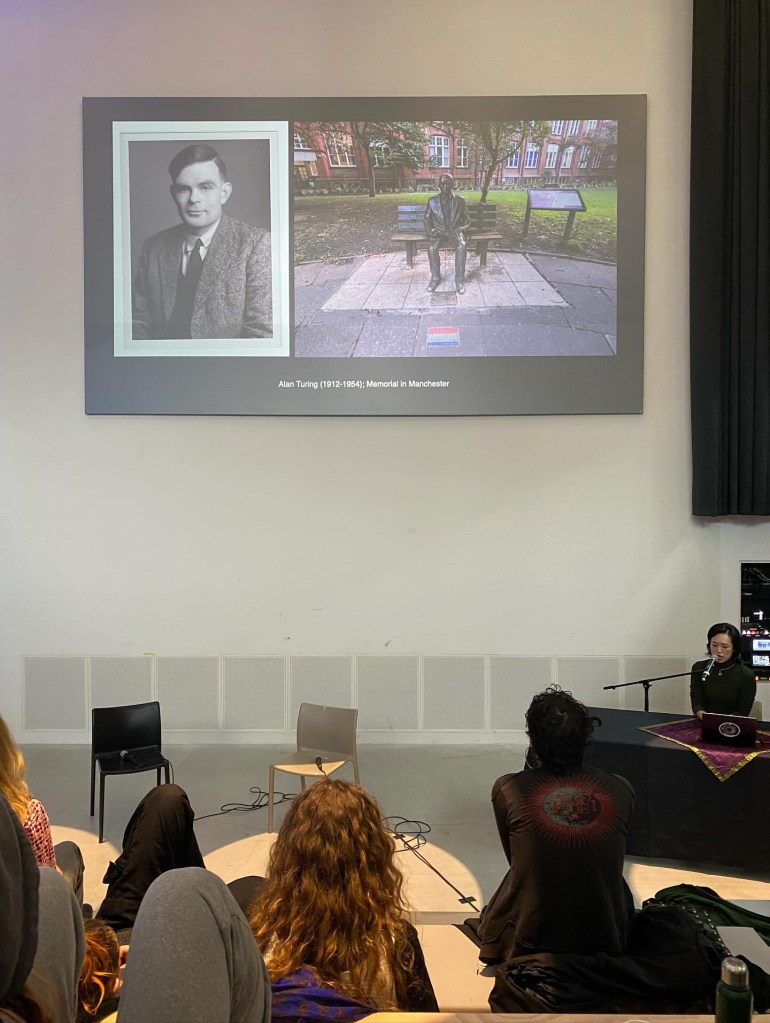
There has been an age-old desire to transcend death through various technologies. With AI, it seems like we are one step closer to digital immortality through creating digital doubles of ourselves who can live forever online. Grief technologies have come onto the market in recent years, with various artists, individuals, and companies experimenting with training chatbots from our conversation and email data to create what they call griefbots. You can chat with the semblance of your loved ones even after they are gone. You can scan your bodies and motion capture to create digital avatars for the metaverse. Using as little as 1 minute, someone’s voice can be cloned. Amazon Prime TV series Upload (2020- ) imagines that in the future, we can all scan our brains and live our digital afterlives in the metaverse, where loved ones can visit via VR.

Continue reading “Dying with AI (2025)”

Teredo Cablistrius (2024)

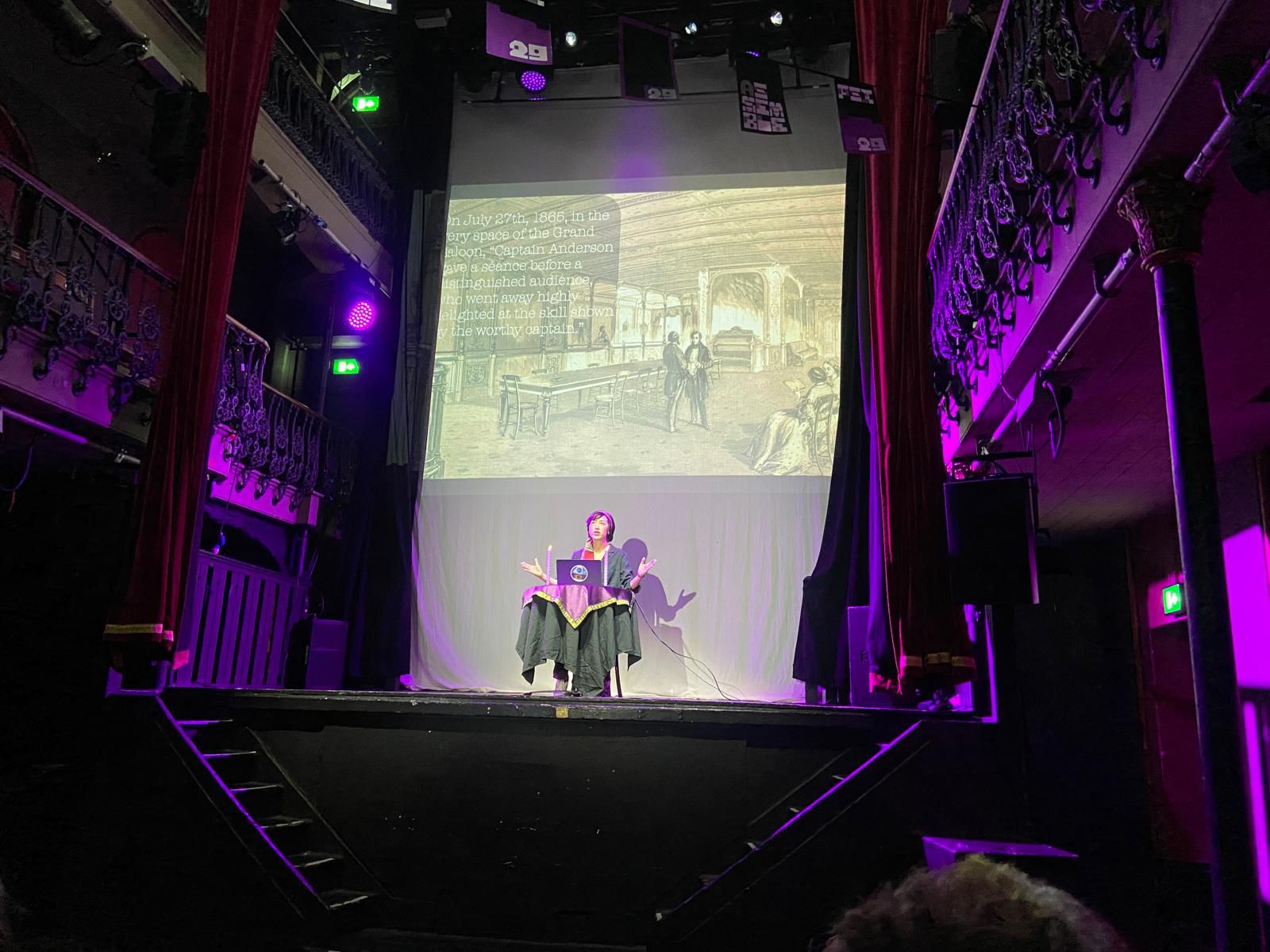
Teredo Cablistrius: Assembling digital infrastructure under the sea is a 40-minute lecture performance that brings together the history of telegraph technology and spiritual telegraphy through retelling the story of the vessel Great Eastern, which set sail in 1864 to lay the first Trans-Atlantic telegraph cable between colonial Ireland and Canada. The lecture critiques how technology extracts labour from female and coloured bodies. The form of the lecture performance is a seance that calls forth the spectres of the female mediums and cable worms which haunt our digital infrastructure, to study the colonialist and extractivist underpinnings of digitality.

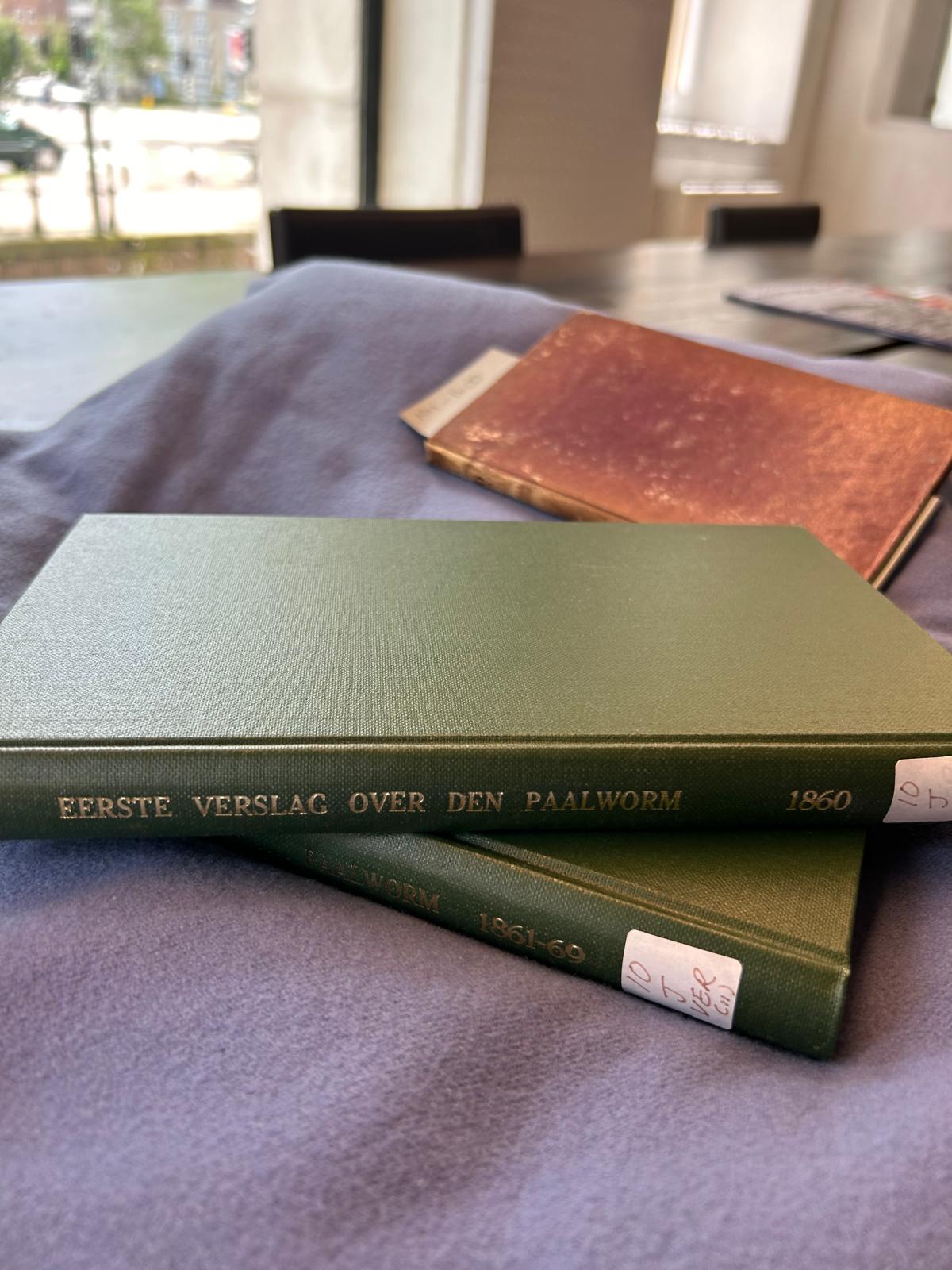
The work activates the dual definition of the term “medium” through Jeffrey Sconce’s work Haunted Media (2000) which addresses medium as mediation as well as medium as spirit contact. By turning towards the spectral, I listen to the ghosts of these worms seeking justice against colonial extractivism and domination in the process of technological development. Drawing from maritime archival research in England and in the Netherlands, the performance critiques the extractivist nature of technology but presents a hopeful decolonial and anti-colonial stance through its materials. Playing with AI voices, I asked a real historical female medium Florence Cook to possess my computer to tell the story of how female bodies and labour have been absorbed into technology from the 19th century till now.

Continue reading “Teredo Cablistrius (2024)”

On Haunted Houses and Smart Houses (2024)

I joined hands with Media Studies scholar Anthony Enns (Dalhousie University, Canada) and connected 19th-century Spiritualist imaginaries of the networked home with contemporary smart houses. We presented our latest research “Tracking Movement and Activity in Haunted Houses and Smart Houses: The Horrors of Networked Domestic Spaces” at Movement and Computing Conference, Utrecht University, 30 May 2024. We are currently working on a co-written publication consolidating the genealogy of smart home horror films.

Continue reading “On Haunted Houses and Smart Houses (2024)”

Decolonising the Binary Arithmetic @ IMPAKT: Digital Colonialism (2024)

In this talk (50:41 onwards), I trace an alternative genealogy to the binary arithmetic through the I-Ching, often lauded as an inspiration for the binary code system invented for computation. What happens if we zoom into this tiny footnote in the history of computation? Why did Leibniz turn to the I-Ching? I situate Leibniz’s invention of binary arithmetic in the era of colonial expansion through the spreading of the Christian faith. What possibilities does this reference open up in thinking through the limits of binary arithmetic?

This lecture was presented in Jan 2024 at IMPAKT, Centre for Media Culture in Utrecht, upon invitation by curator Daniela Tenenbaum.

An earlier version was presented in the context of the Holistic Technology Salon, hosted by V2_Lab for the Unstable Media, Rotterdam, at the exhibition Liquid Dreams (Annika Kappner) in TETEM, Enschede, in October 2023. With thanks to the feedback from my interlocutors and the participants!

The Medium is a Medium (2023)

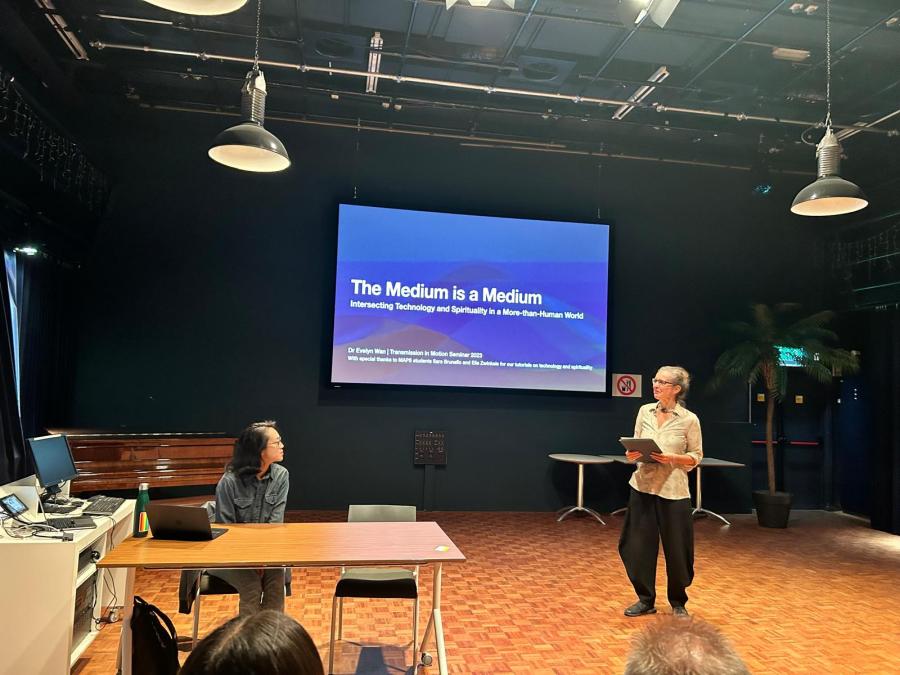
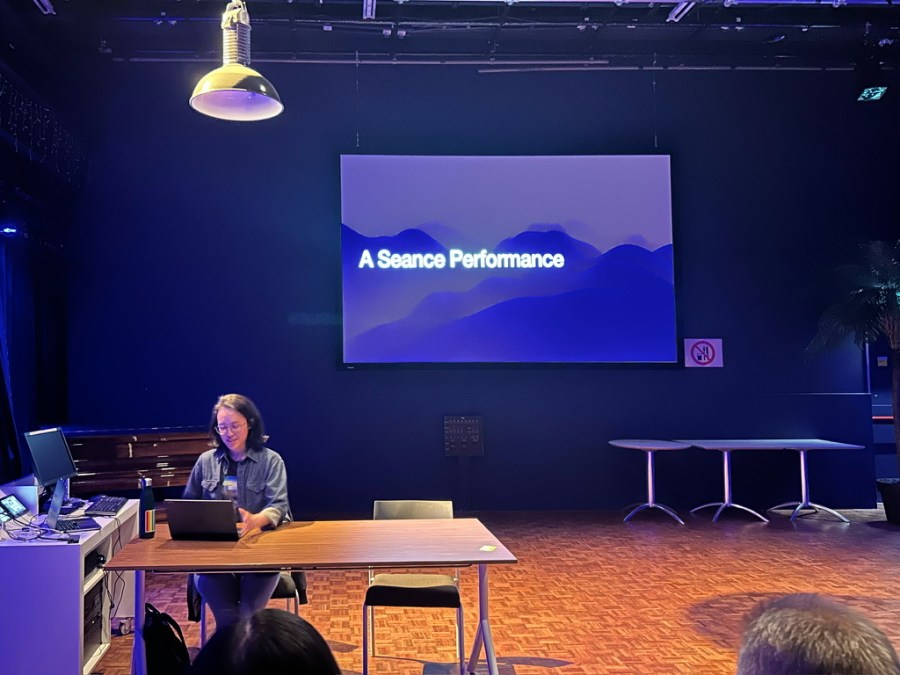
“The Medium is a Medium — Intersecting Technology and Death in a More-than-human World” is a performance lecture that brings together 19th century Spiritualism and seances with 21st century AI technologies such as ChatGPT and Dall-E. The starting point is the resurrection of Dali through AI as an avatar in The Dalí Museum in Florida, and the return of Dali through the generative AI tool of Dall-E. Through a spectral method of communing with ghosts in the archive, the work addresses the transcendence of the biological limits of death through technology and the spectres of AI.

This performance has been presented at the Transmission in Motion Seminar series at Utrecht University in May 2023 upon invitation by Maaike Bleeker, and at Studium Generale “Technodiversity: Beyond Datafication and Digital Colonialism” Series at Rietveld Academie Amsterdam in Feb 2024, upon invitation by Jorinde Seijdel and Flavia Dzodan.

Continue reading “The Medium is a Medium (2023)”

Techno-Colonisation of Time@BAK (2022)

Performative lecture that contemplates and unpacks the clockwise movement of clocks, and the political potential of moving counter-clockwise: “Colonising Time: A tale of timekeeping technology, rotational movements, and murder” (38:06 onwards), presented in the context of the symposium of exhibition, No Linear Fucking Time, curated by Rachel Rakes.

The write-up of this lecture is published in the chapter, “The Left-Hand Click and the Left-Hand Lay: Intersecting Technology and Folk Belief in Posthuman Spirituality.” in Mapping the Posthuman, edited by Grant Hamilton and Carolyn Lau. New York: Routledge, 2023.

When the world is at war, we just keep dancing (2018)

To dance a ritual for the volcano, to trace networks of connectivity, to mourn the violence committed for our digital world.

Trailer, featuring “The World is My Land” by Congolese band Jupiter & Okwess, and traditional Congolese dance transmitted to me by dance artist and anthropologist John Kayongo (Studio Lionpaw, The Netherlands)

In the spirit of dancing my PhD, I created a performance lecture using storytelling and traditional Congolese dance, based on my research on conflict minerals and our digital devices. The work turns to the materiality of the body and of the earth, and invites the audience to tune into the polyrhythms underneath our smart devices: from the rhythm of earth’s core to the rhythm of dance, from the rhythm of war, to the rhythm of technological progress. This dance-based performance lecture was presented at a former independent arts space soft/WALL/studs in Singapore in Dec 2018.

A write-up of my research on mining in the context of Congo is currently underway for SAGE Handbook on Digital Labor (forthcoming, edited by Ergin Bulut, Julie Chen, Rafael Grohmann and Kylie Jarrett). An earlier piece, Labour, mining, dispossession: on the performance of earth and the necropolitics of digital culture. is published in International Journal of Performance Arts and Digital Media, 15(3).

Continue reading “When the world is at war, we just keep dancing (2018)”

Graduate Seminar: From Bots to Spectres

I currently teach a graduate seminar series through the Netherlands Institute for Cultural Analysis as part of their Core Curriculum in the academic years 2023-2024, 2024-2025, and 2025-206. The course is on histories of technologies and their entanglements with spectrality, esoterism, and spirituality.

Who are we really interacting with when we chat with a bot? What lurks behind the interface of AI? What drives the anthropomorphic understanding of machines as intelligent beings? The course approaches AI from a media archaeological perspective, and studies media histories that might help us understand the medium of AI, such as chat-based AI like ChatGPT, Bard, Replika, Insomnobot-3000, and beyond.

Continue reading “Graduate Seminar: From Bots to Spectres”

Book Project

My PhD research on the prehistory of algorithmic governance is currently being developed into a monograph for publication. The version that was submitted for examination is available open-access at Utrecht University’s depository.

Here is a summary of what the book is about:

Technology ties us to capitalist time. Digital technologies are time technologies. As media scholar Wolfgang Ernst suggests, “the power of clocks has migrated into the computer itself” (2016, 181). Not only are computers intricate clocking machines that produce internal rhythms of processing that are completely removed from human perception, they also function to compress and accelerate time, automating tasks and predicting outcomes at superhuman speeds. 

Digital technologies, like earlier time technologies, form a series of abstractions that remove us from our innate connection with nature. The prehistory to today’s algorithmic governance is a story of how we lost sense of time in our bodies and in connection to nature.

The rhythm of clocks can be seen as a prototypical algorithm that proceeds with the calculation of 60 seconds as a minute, 60 minutes as an hour, etc., that in conjunction with other time-telling and time-management technologies, trap our bodies into the grid of time. The wide adoption of clocks and standardisation of time and timezones during the Industrial Revolution enables control and labour management through temporal governance. In our current digital era, algorithmic governance can be seen as an intensification of such time discipline, control, and management–a machinic time-based governance that can be observed from gig economy labour to durational data extraction through (self-)tracking devices.

In the book, I take apart the notion of the digital algorithm through its analogue predecessor — clocks and time. At the heart of this inquiry is the question: how did we lose sense of the time of our bodies, of our ecosystems, and of the planet, and how might we reclaim time? Resistance towards algorithmic systems, I argue, goes beyond discussions of technology and requires a rethinking of how we maintain agency over time itself.

As I unravel histories of time throughout the book, I also offer alternatives of imagining what our bodies could do in order to reclaim time. This is manifesto for the agency of our bodies, and a polemic against handing over our agency to algorithmic machines and AI.