
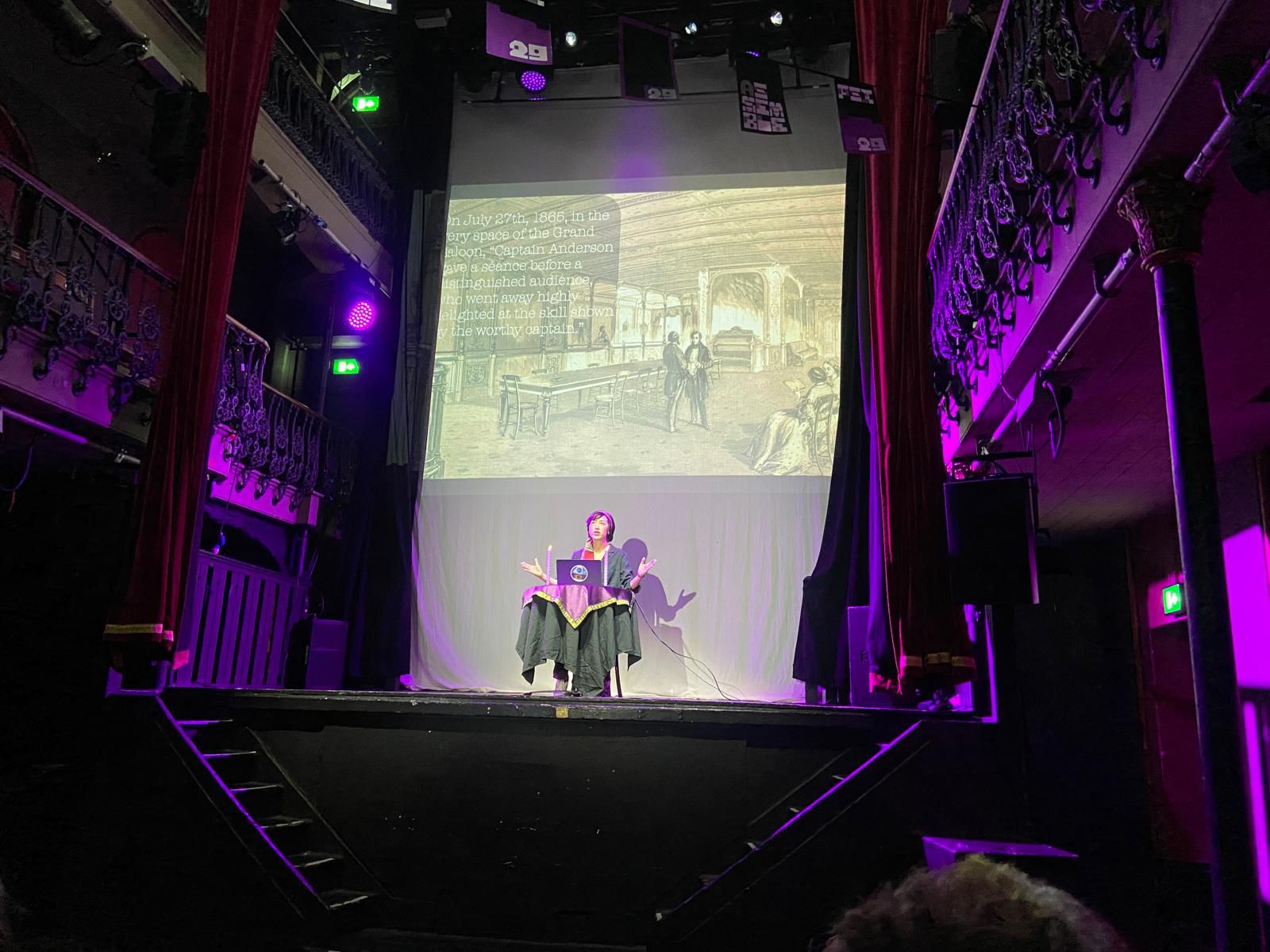



Teredo Cablistrius: Assembling digital infrastructure under the sea is a 40-minute lecture performance that brings together the history of telegraph technology and spiritual telegraphy through retelling the story of the vessel Great Eastern, which set sail in 1864 to lay the first Trans-Atlantic telegraph cable between colonial Ireland and Canada. The lecture critiques how technology extracts labour from female and coloured bodies. The form of the lecture performance is a seance that calls forth the spectres of the female mediums and cable worms which haunt our digital infrastructure, to study the colonialist and extractivist underpinnings of digitality.
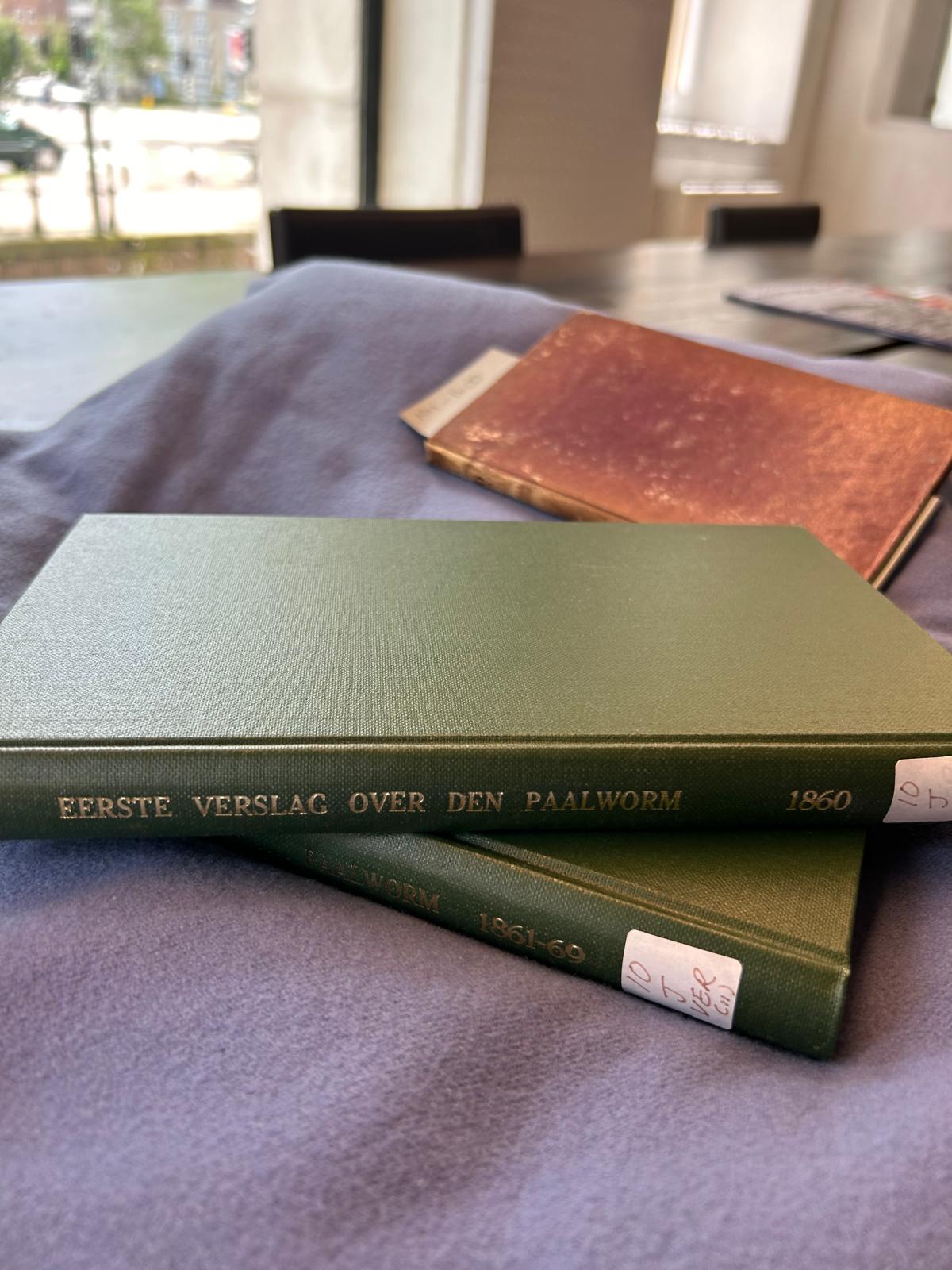
The work activates the dual definition of the term “medium” through Jeffrey Sconce’s work Haunted Media (2000) which addresses medium as mediation as well as medium as spirit contact. By turning towards the spectral, I listen to the ghosts of these worms seeking justice against colonial extractivism and domination in the process of technological development. Drawing from maritime archival research in England and in the Netherlands, the performance critiques the extractivist nature of technology but presents a hopeful decolonial and anti-colonial stance through its materials. Playing with AI voices, I asked a real historical female medium Florence Cook to possess my computer to tell the story of how female bodies and labour have been absorbed into technology from the 19th century till now.
The performance premiered in London in June 2024, at one of London East End’s surviving Victorian theatres, Hoxton Hall, featuring original iron railings from 1863.
玩味虛實,並置真假的講述表演 (明報世紀版) 28/06/2024
俞若玫
好的,本周讓我們談談Lecture Performance 這個有趣的混合體,它如何好玩地在知識生產及展演性之間跳躍,在真假中創建一個反身思辯的迴路,同時又可以是個情感滿滿的感性空間。
如你所說,早在幾十年前,講述表演在西方的視覺藝術及舞蹈表演界早有先行者,而最近似乎開始在本地蔚然成風。而這個充滿可能性的方法,在學術界也相當流行,如剛參加過的PSi (Performance Studies International) 在過百的學術演講及工作坊中,也有很多以此形式來探究社會及文化議題,如重展黑人女性的故事、呼召殖民時期的幽靈等等 ,以個人化感性的維度或跨越生死的好玩展演方法,帶出深厚的研究結果、歷史挖掘及複雜辯證。
自己也在不同大學教了十多年書,深明每場課堂都是一場獨特的演出,但劇本固然要跟課程要求,方式也會跟隨沒有明言但很穩固的規程(protocol),如精美幻燈片製作、短片播放、說話明快、適度互動、中間夾雜剛好的笑話及自嘲等等。知識傳播及生產的方法都在教育的商品及建制化下,愈來愈僵化。而TED Talks 展示另一種知識共享,講者鬆綁了正規教育及知識產權的框架,讓生產知識的方法更流動,但少有想像的跳躍和共創的可能,觀眾仍是單向、較被動地接收既有的知識。
而講述表演卻從真實的數據、文獻或研究裡玩味傳播知識的方法、在獨特的展示空間(劇場、圖書館、展廳、講場)一反客觀的大敍事,拉出個人情感及具身(embodied) 向度,構建真真假假的空間,開動各種對知識、真實、歷史本身的嘲諷、嬉笑或詩意的提問。
如你提及的藝術家潘子懷,五月底在亞洲藝術文獻庫以「歷史回生」去回應展覽《香港再偶拾》,是個很好的例子。很欣賞潘子懷對自身家族歷史的耐心尋覓,態度清明,沒有戲劇化的自我沉耽。她翻開外祖母寫在小小筆記裡的字跡及紀錄的內容,是具像,可觸的真實文件,既是個人,家族的,也是一個時代的溫度。而翻飛了幾十年後,觀眾和她一起重看父親潘少輝97年首演的當代舞作品《狂人某日記之花花世界》,是一次很震撼的經驗,一起跟歷史重新照面,細看舞作如何以前衛之姿,狂亂的身體及各種符碼的併貼去回應當時中西文化撞擊及身份認同的困窘,跟今天又有多少異同? 有趣的是,當時潘子懷仍未出生,她不是懷舊,而是重新想像歷史,重構歷史。潘子懷聰明地善用講述表演的輕巧,以實物、低度技術、個人微觀來讓觀眾一起從新想像社會歷史及再訪集體記憶。
今年在PSi看到了現在荷蘭教書及發展的香港藝術家Evelyn Wan 的作品Teredo Cablistrius: Assembling digital infrastructure under the sea 。這個作品非常有趣,藝術家從歷史檔案裡召魂,再傳到電腦,再到她的身上,大玩媒界(medium) 既是中界也是靈媒的多重況味。而她除了呼召了女人的聲音外,也傳來一條叫cable worm 吃木質的滑溜小蟲,它上了她身後,以第一身聲音,讓大家聽見小蟲如何咬食了百多年前荷蘭及英國在海底鋪建的電纜,當中對殖民者的戲謔及科技的脆弱很是有力,而且有趣。同時有真實又有擬真的文獻支援。觀眾不但只看見虛擬上身的幽靈,同時看見有關Teredo Cablistrius 這種昆蟲的真實紀錄片。
其實自己在去年在YSpace 的演出「你/理」想舞蹈,也做了五場的講述表演,用了市場調查的資料、舞者的真人訪問,猴子在山上的群勳以及Dance Fever 和禁舞令的歷史故事來跟觀眾互動,都是想打開大家對舞蹈本身的既定理解,及對舞蹈的社會能量有更多的想像。
講述表演是不是很快被制式化為一種藝術形式,我不太肯定。但是,藝術家都樂於拆開單一及被擠開的知識結構及僵化的生產方法,引動更多微小、有情感,有身體,有想像力的多樣空間去建構、閱讀及再建構多重歷史並置的可能,這個很是肯定。
 EVELYN WAN